Down 29 in the Finals
June 11, 2026
The startup world worships people who have only won. The only ones who can coach you through a real company are the ones who know how to lose.
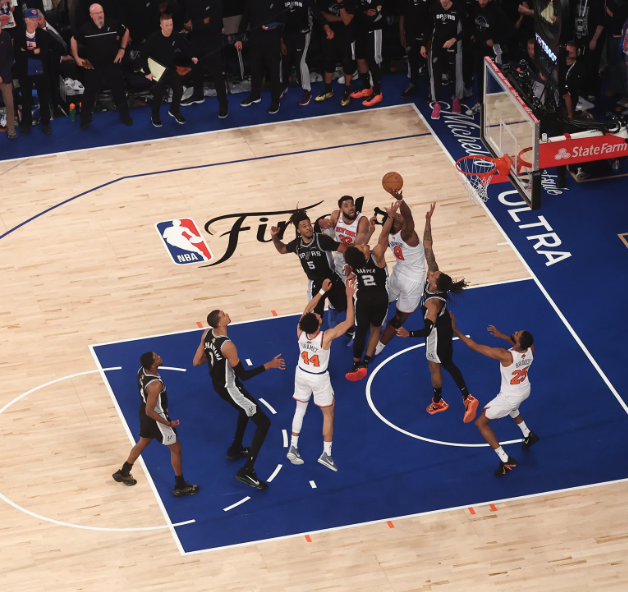
Wednesday night, Game 4 of the NBA Finals, Madison Square Garden. The first quarter ended 41 to 22. By the second quarter the Knicks were down 29 points. At home. In the Finals. In front of the loudest, most wounded fans in basketball.
Down 29 in a Finals game is not a deficit. It’s a verdict. The room had already decided. You could feel it through the TV: the Garden went from a roar to that low murmur a crowd makes when it starts rehearsing its grief.
Here’s what the Knicks did. Nothing dramatic. No miracle shot, no fight, no speech you’ll see in a documentary someday. They made one more play. Then another one. They won the third quarter 26 to 14. They won the fourth 32 to 16. Brunson finished with 36. Anunoby hit seven of nine from three for 33. Final score: 107 to 106.
One point. After being down 29, they won by one.
I’ve been building companies for twenty-five years, and watching that game I realized something founders and VCs almost never talk about: nobody teaches you how to be losing. Everybody teaches you how to win. Pitch decks, growth playbooks, hiring frameworks. There’s an entire industry built on winning. There is no industry built on being down 29 with the room against you, because nobody wants to admit how much of company building is exactly that.
And in sports, at least there are refs. Somebody to call the cheap shot, stop the clock, restore order. In business there are no refs. There’s just you, your team, and your investors, all betting that you’ll find a way. Nobody is coming to call a foul on the market.
I know what down 29 feels like. I’ve been there three times. Once we came back and won. Once we played to the buzzer and lost anyway. The third game is still going on right now.
The first time, my cofounder Scott Yara and I sat in his black 5 Series BMW in the pouring rain. It was the same car we took on every sales call, and now there was no one left to sell to. The dot-com crash had erased our market. Our company, Metapa, was out of money. We had eighty employees and an office lease big enough to bury us, and there was no way out that didn’t hurt.
So we did the unglamorous thing. We pivoted the whole company into a pure-play database business. We recapped, which is a polite word for everyone taking pain. We renamed it Greenplum. The grind that followed was long and it cost me personally: I left the team before the ending. But the company we refused to let die in that car sold to EMC in 2010 for a reported $300 million and became the foundation of what’s now Pivotal.
That’s the comeback. Down 29, won the second half. Now let me tell you about the loss, because if I only tell you the comeback, I’m selling you a poster.
In 2004 I founded Buzzmedia. I grew it from eight slides to 250 people and a $50 million run rate. We had great content, great talent, and more than 100 million people a month reading our 45 sites. Looking back, we’d built something between Snapchat and TikTok, all aimed at pop culture, years before either existed. We called what we were doing social media. The entire market, every reporter, every buyer, every analyst, insisted on calling it social networking.
Two words. That’s all it was. And we lost a war over them.
Because while we were trying to get our story out, the world turned mobile and video, and we weren’t built like Facebook was. Facebook bought Instagram and started really winning. Nobody cared about our traffic or our engagement, because they were buying, writing, and talking about a category we weren’t the name for. We were right about everything and it didn’t matter. We made some money, but not the return my investors at Redpoint, Sutter Hill, and NEA bet on.
Here’s the lesson that cost me years to learn: businesses don’t win and lose on who’s right. They win and lose on details and the story the market buys. We had the better product thesis. They had the better story. The scoreboard doesn’t have a column for being early.
And the third game? That one’s live. At Wevr, we’ve spent a decade building immersive experiences, with Epic Games and Warner Bros. on our cap table and some of the most iconic VR work ever made on our resume. The market we bet on still hasn’t fully shown up. The TAM, the thing investors size before they size you, isn’t there yet. So we keep playing forward while we figure it out. No buzzer has sounded. We’re down, and we’re still on the floor.
So what do you do when you’ve come back once, lost once, and you’re mid-game on the third?
You keep playing.
Here’s why this matters more right now than at any point in my career. AI is making everything faster and flattening the field. Your two-person competitor now ships like a twenty-person team. The punches come more often, for everyone, and from directions you can’t scout. Deals you counted on won’t close. Investors will go quiet at the exact moment you need them most. The advantage is shifting from the teams that punch hardest to the teams that recover fastest.
And here’s the problem: a lot of the people coaching founders have never recovered from anything. There are too many VCs and operators whose entire careers happened on winning teams. If every company you joined was a rocket, you learned a lot about riding rockets and nothing about what to do at 41 to 22. They’re not bad people. They’ve just never been down 29, and you can’t coach what you’ve never survived.
Watch that Knicks roster and you’ll see what a resilient team actually looks like. It’s not a collection of the most talented people available. It’s a mix. Veterans who’ve eaten playoff heartbreak next to young legs with no scar tissue yet, feeding off each other. Guys coming off the bench and changing the temperature of the floor. Down 29, the veterans knew something the scoreboard didn’t: the game is longer than the moment.
If you’re building a company, build that. Mix the ages, mix the talent, and above all mix the scar tissue. Find a few teammates who have been punched in the mouth and got up. Then build a culture around a single belief: there is always one more play. Win the customer back. Make the product better tonight. Send the cold DM. The play doesn’t have to be brilliant. It has to be next.
I’ll tell you who I watched closest Wednesday night. Brunson. A second-round pick nobody projected as a Finals star, who turned himself into the player New York trusts with the last shot. He dropped 36 on the night his team was left for dead. He has spent his whole career on elite teams, playing the game at the highest level there is. And he has never won a ring. As I write this, the Knicks are up 3-1, and he still hasn’t.
I know that scoreboard. I’ve spent twenty-five years on elite teams, building things that mattered, playing at the level I always wanted to play at. If winning means the IPO or the billions, I’m not there. By that math, neither is Brunson. But watch him play for one quarter and try telling me that man is losing.
So here’s the question that game left me with. Is winning the ring? Or is winning getting to keep playing the game you love, with great teams, and still wanting the ball when it matters? I know my answer. These days I help business owners too, and when they call me down 29, I tell them what I’m telling you.
The Knicks came back from 29 down and won by one. A historic team effort and win. Games, companies, and lives are won by milliseconds. The clock hasn’t stopped on yours, and it hasn’t stopped on mine.
Keep playing.
-Anthony @djabatt